

How to know what to spend when.
Retirement is a significant life transition that often evokes a mix of excitement and apprehension. As individuals approach this milestone, they are faced with a myriad of questions and concerns, ranging from timing their exit from the workforce to envisioning their post-retirement lifestyle. A common question we receive centers around withdrawals, and how to ensure the funds last through retirement. Keep reading! We have you covered.
In the pursuit of a secure and fulfilling retirement, effective management of assets plays a pivotal role. Understanding how to leverage these assets to sustainably support one’s lifestyle while preserving financial security is paramount. In our exploration of retirement planning, we delve into the concept of withdrawal rates—a key metric that shapes the longevity of retirement savings.
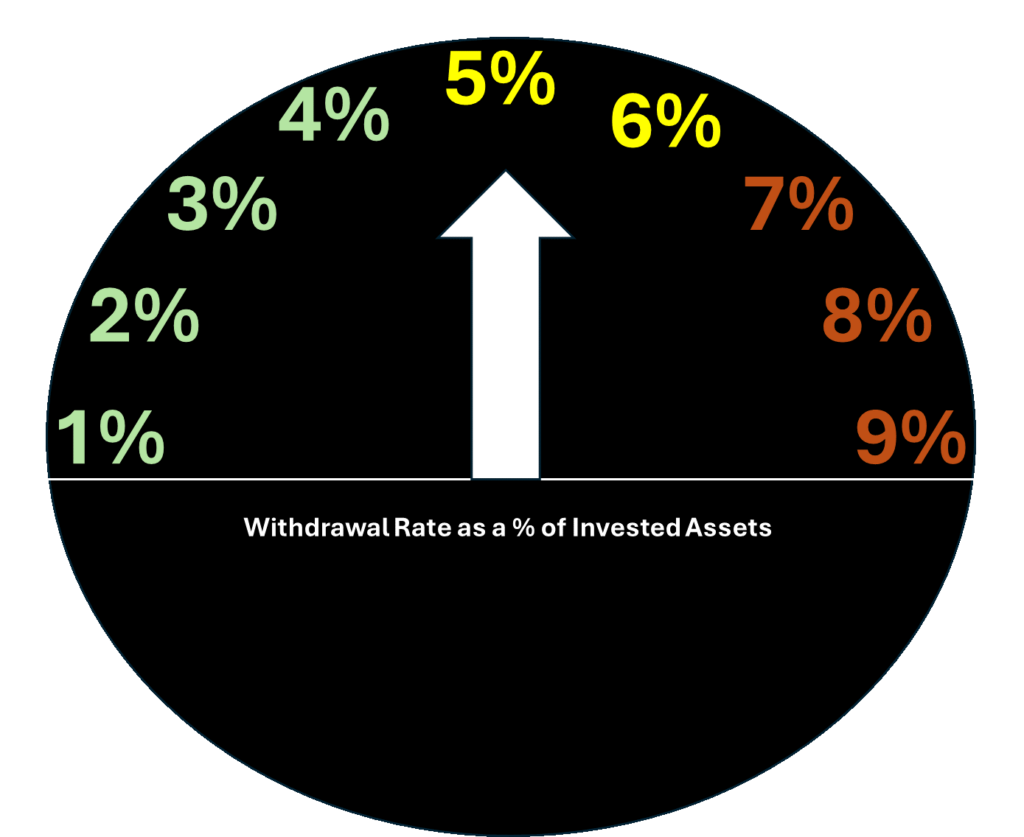
Imagine your retirement savings as a car journey, with the withdrawal rate serving as the speedometer. At lower withdrawal rates, akin to cruising at a moderate speed (1% to 4%), your assets are poised to endure the entire journey, with potential for growth along the way. This range aligns with conventional wisdom, offering a balance between meeting financial needs and safeguarding the longevity of retirement funds.
However, as the withdrawal rate climbs into the 5% to 6% range, it’s like accelerating on the highway. While not immediately alarming, it warrants attention. At these speeds, the sustainability of your retirement savings may become less assured, with potential implications for long-term financial security. Vigilance and periodic reassessment are essential to navigate this terrain effectively.
Exceeding a 7% withdrawal rate is like pushing the pedal to the metal—a risky maneuver that could erode your retirement savings over time. Continuously drawing at such high rates may deplete your principal amount, compromising your financial resilience in the face of unforeseen expenses or economic downturns.
This chart breaks it down a little further:
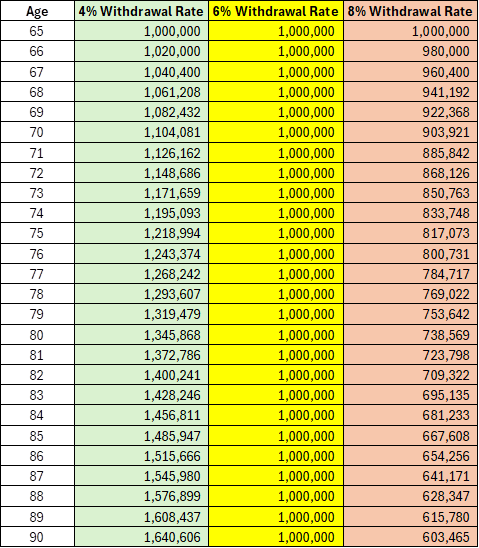
Assuming a 6% rate of return in each scenario
It’s important to note that retirement planning is a nuanced endeavor, shaped by individual circumstances and preferences. Factors such as risk tolerance, legacy goals, and lifestyle choices inform withdrawal strategies and asset management decisions. Moreover, staying attuned to market dynamics and adjusting withdrawal rates in response to changing conditions can enhance financial resilience and optimize retirement outcomes.
Ultimately, retirement planning is not merely about accumulating wealth but about deploying it strategically to sustain a fulfilling and financially secure lifestyle. By understanding the nuances of withdrawal rates and adopting a proactive approach to asset management, individuals can navigate the road to retirement with confidence and clarity.
Summary:
The article emphasizes using sustainable withdrawal rates—typically between 1% and 4% of retirement assets—to balance income needs with longevity risk and preserve portfolio growth potential. Withdrawal rates in the 5%–6% range are likened to accelerating too quickly—potentially acceptable but requiring close monitoring and periodic adjustments to avoid depleting funds. Rates above 7% are considered aggressive and pose a high risk of exhausting principal, especially during market downturns or unexpected expenses. The article highlights the analogy of withdrawal rates as a “speedometer”—slower rates offer greater sustainability, while faster rates demand greater vigilance. Ultimately, by understanding withdrawal-rate thresholds and adjusting distributions in response to market conditions and personal circumstances, retirees can better ensure their savings last a lifetime.
Disclosure:
Green Ridge Wealth Planning, LLC is a registered investment adviser. The information provided here is for general informational purposes only and should not be considered an individualized recommendation or personalized investment/tax advice. The investment/tax strategies mentioned here may not be suitable for everyone. Each investor needs to review an investment/tax strategy for his or her own particular situation before making any investment decision(s). You are responsible for consulting your own investment and/or tax advisor as to the consequences associated with any investment.
The opinions referenced are as of the date of publication and are subject to change due to changes in the market or economic conditions and may not necessarily come to pass. Any opinions, projections, or forward-looking statements expressed herein are solely those of the AUTHOR, may differ from the views or opinions expressed by other areas of Green Ridge Wealth Planning, LLC, and are only for general informational purposes as of the date indicated.